
Lesson time is possibly now the only waking moments when children are more than a metre from their phones or computers. With end of year exams for all students as well as GCSEs and A levels this is a difficult time for parents, trying to balance wanting them to do their best and maintaining family sanity. Tears, tantrums and insomnia, despair and feelings of uselessness – and that’s just the teachers – test all families. A little revision is never enough but does help. I have a little advice for parents on this.
Before I do: kids used to watch trivial TV all night before phones; I watched Crossroads for years. Before proper TV we used to do all sorts to avoid studying. I mainly annoyed neighbours, playing out. I was asked to leave Cubs because I had trouble, aged 10 with the pledge of allegiance to an English queen. Bill and I carried on doing Bob-A-Job long after we left. I even used to play football on Protestant Church land – thus risking eternal hell fire, or so Father Bryant told us, just before he had to explain some naked behaviour on a Lourdes pilgrimage.
Phones and computer games are addictive. Many boys play games every day from the time they get home to the time they try to get to sleep. Pulling away can be hard but like most addictions it can be controlled.
Many revisers put the ever-pinging phone in a drawer when studying - maybe for half an hour at a time.
One boy negotiated and agreed that parents take his games console to work so he is free to study. One girl is weaning herself off her phone because social media is ruling her life. Decisive kids, the pair of them.
Children are exposed to drugs and sex earlier than ever before and our task as parents and teachers is not to hide them away from such issues, because we really can’t cotton-wool them that much, but to teach them the skills to be able to make their own decisions. And, contrary to established hysteria computer games are good for you: manual dexterity , problem-solving, competitiveness and creativity are all enhanced. And, it keeps them quiet and off the streets.
Now, onto my butchering of the inimitable Diane Carey’s more scientific approach to computer addiction.


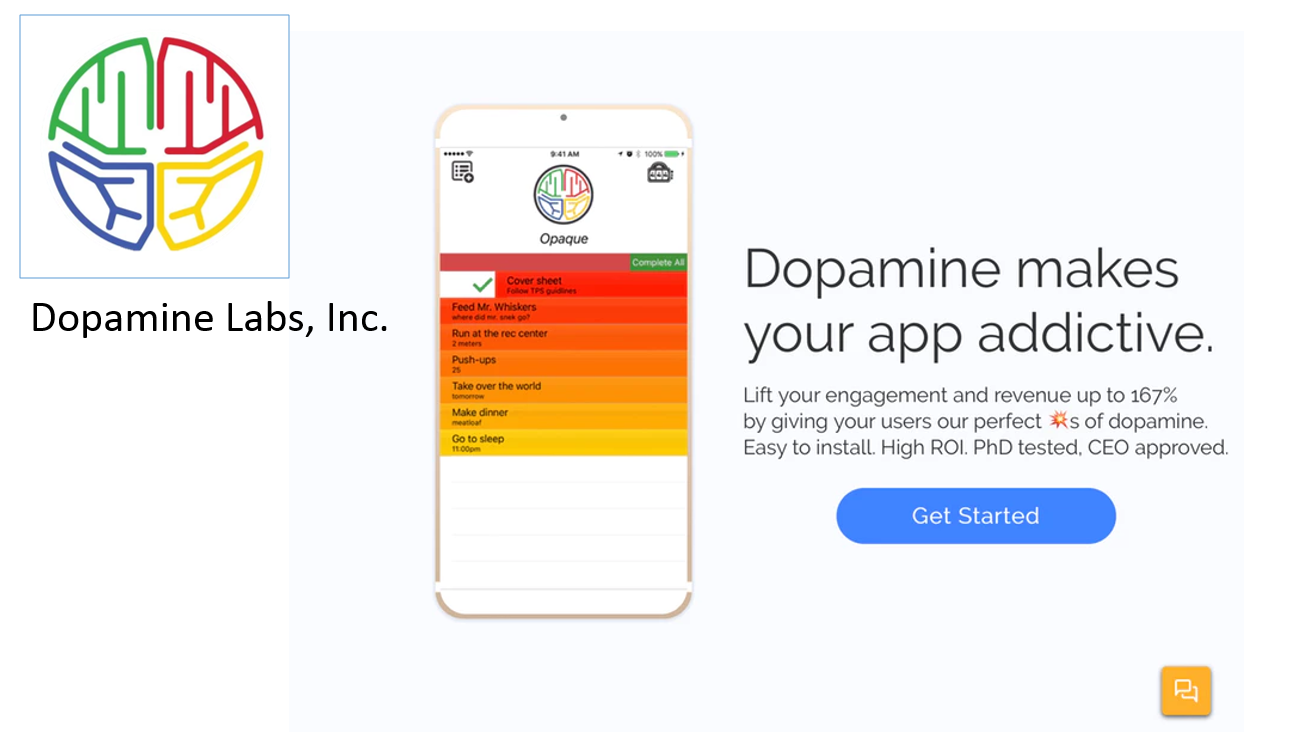
There are increasing numbers of commercial companies developing, using and selling the technology of addiction.
Before I do: kids used to watch trivial TV all night before phones; I watched Crossroads for years. Before proper TV we used to do all sorts to avoid studying. I mainly annoyed neighbours, playing out. I was asked to leave Cubs because I had trouble, aged 10 with the pledge of allegiance to an English queen. Bill and I carried on doing Bob-A-Job long after we left. I even used to play football on Protestant Church land – thus risking eternal hell fire, or so Father Bryant told us, just before he had to explain some naked behaviour on a Lourdes pilgrimage.
Phones and computer games are addictive. Many boys play games every day from the time they get home to the time they try to get to sleep. Pulling away can be hard but like most addictions it can be controlled.
Many revisers put the ever-pinging phone in a drawer when studying - maybe for half an hour at a time.
One boy negotiated and agreed that parents take his games console to work so he is free to study. One girl is weaning herself off her phone because social media is ruling her life. Decisive kids, the pair of them.
Children are exposed to drugs and sex earlier than ever before and our task as parents and teachers is not to hide them away from such issues, because we really can’t cotton-wool them that much, but to teach them the skills to be able to make their own decisions. And, contrary to established hysteria computer games are good for you: manual dexterity , problem-solving, competitiveness and creativity are all enhanced. And, it keeps them quiet and off the streets.
Now, onto my butchering of the inimitable Diane Carey’s more scientific approach to computer addiction.


We have an exam regime which requires young people to interpret, reason, analyse and apply a whole load of new knowledge to a wide range of unfamiliar contexts. Curiosity, adaptability and a willingness to learn new things are key skills for our rapidly evolving workplace. We have to prepare our students for this. We must foster in them a desire to think creatively, to be challenged and to keep going as they struggle to work out their own solutions to old and new problems.
The future will be a very different place, particularly in employment. And we are facing a potentially sinister, far-reaching threat to our young peoples’ capacity to learn.

Business exists to sell its products and what the phone and computer companies want is our Attention: It’s worth a whole load of money and there is a limited supply of it to go around so companies are turning to increasingly persuasive techniques to keep us glued to their product.

Companies employ experts who know how to programme smart technology to influence the evolutionary instincts of the human mind. You might think that this is bit extreme bit it’s not called ‘race to brain stem’ for nothing. You can even take a course in it.

These people know how to get us hooked. Every time we open up Facebook, You Tube, Instagram, we activate a super computer, pointed straight at our brains, trying to work out its next move to keep us plugged in.

They are creating our social reality. It’s personalised news feeds, video feeds, photo feeds and adverts – all perfectly curated to our specific interests, based upon our click history.

Social media stimulates biochemical responses. You think about checking your phone. Has anyone responded to your Instragram post, your last WhatsApp message? This generates cortisol, which makes you feel anxious. You need to get rid of that anxiety so you check your phone. What you see then messes even more with your brain. A couple of people, whose opinion you really value, like your post. Those little pings of social affirmation stimulate the brain’s reward system to produce dopamine. It feels good. You want that again. Or maybe no one has responded, or even worse, made a negative comment; this releases more cortisol so you have to keep checking to relieve the anxiety, And so it goes on.

Dopamine is the brain’s way of rewarding us for a job well done, a problem solved. From an evolutionary perspective, dopamine rewarded us for solving a problem or making a decision most likely to sustain life. Once rewarded for solving a problem we were driven to seek out the next challenge. Hence the progress of humanity from the plains of Africa to where we are now. Computer game architects replicate this process in the virtual world, but at a much more rapid rate, dishing out strategically timed rewards, leading to continual surges of dopamine.
Cocaine works by increasing levels of dopamine in the brain. That’s why it is addictive.
There are increasing numbers of commercial companies developing, using and selling the technology of addiction.
Evolutionary physiological adaptations, essential for the journey from dependent child to independent adult, make adolescents particularly vulnerable to these effects. Firstly, adolescence brings a peak in the brain’s sensitivity to dopamine, a hypersensitivity to feedback and rewards. In addition, the high level of brain plasticity at this age means that the adolescent brain is particularly susceptible to external influences as it continually remodels itself in response to the world around it.
Abstinence alone will not cure an addiction. That space needs to be replaced with meaningful activities that stimulate, enrich and fulfil.
Let's have a look at what makes a great computer game.
A good game uses achievable, incremental challenge, based upon current ability. Gamers know what they are trying to achieve. Feedback and rewards are frequent, but not so prolific as to render them meaningless. Opportunities to join forces online to overcome challenges satisfy the adolescent drive to collaborate with and impress peers. Upgrades and add-ons are provided for those who are starting to get bored.
Isn’t this what great teaching is?
We have access to all of these strategies.
Through great teaching we can activate the challenge, reward, dopamine response.
The best lessons use the incremental stepping up of challenge to maintain pace, some differentiation to make sure that everybody is involved, strategic use of rewards and the opportunity to collaborate where appropriate.
And when students are learning, the same will most likely be true for us: Our goals are clear, the challenge is high, our skills match the challenge; we’re getting immediate feedback from kids and adjusting so that we can meet their needs and accomplish the goal. And when it happens, it is synergistic and rather marvellous.
So yet another area where the ever decreasing numbers of teachers can become the saviours of the human race, replacing obsessive computer games with powerful, inspiring learning opportunities.
And the added bonus is that everyone involved gets a nice big hit of dopamine.
Dennis O'Sullivan
Abstinence alone will not cure an addiction. That space needs to be replaced with meaningful activities that stimulate, enrich and fulfil.
Let's have a look at what makes a great computer game.
A good game uses achievable, incremental challenge, based upon current ability. Gamers know what they are trying to achieve. Feedback and rewards are frequent, but not so prolific as to render them meaningless. Opportunities to join forces online to overcome challenges satisfy the adolescent drive to collaborate with and impress peers. Upgrades and add-ons are provided for those who are starting to get bored.
Isn’t this what great teaching is?
We have access to all of these strategies.
Through great teaching we can activate the challenge, reward, dopamine response.
The best lessons use the incremental stepping up of challenge to maintain pace, some differentiation to make sure that everybody is involved, strategic use of rewards and the opportunity to collaborate where appropriate.
And when students are learning, the same will most likely be true for us: Our goals are clear, the challenge is high, our skills match the challenge; we’re getting immediate feedback from kids and adjusting so that we can meet their needs and accomplish the goal. And when it happens, it is synergistic and rather marvellous.
So yet another area where the ever decreasing numbers of teachers can become the saviours of the human race, replacing obsessive computer games with powerful, inspiring learning opportunities.
And the added bonus is that everyone involved gets a nice big hit of dopamine.
Dennis O'Sullivan

